




Abstract
What is an AI Visibility Tool?
An AI visibility tool tracks how a brand appears inside AI-generated answers, including which prompts surface it, how often it is recommended, and where competitors appear instead.
What are the top AI Visibility Tools?
Limy | Otterly.ai | AthenaHQ | Promptwatch | Rankscale AI | Writesonic | Frase | Surfer SEO | Semrush | Ahrefs | Moz | SE Ranking
Most teams assume they understand how their brand shows up in AI search because they can see fragments of it: prompt tests, visibility scores, or occasional mentions in generated answers. The problem is that these signals reflect outputs, not the underlying process that determines how AI systems evaluate and recommend brands.
Users now click roughly once for every 20 AI prompts, meaning the majority of discovery, comparison, and validation occurs within generated answers before a user ever visits a site. Traditional analytics tools were never designed to capture this layer, leaving a growing gap between what teams measure and what actually drives outcomes.
AI visibility tools attempt to bridge that gap, but they vary significantly in what they track and how useful that data is. This guide breaks down the common categories of AI visibility to help you distinguish between surface-level overviews and meaningful brand control.
What Are AI Visibility Tools?
AI visibility tools track whether AI systems include your brand in the generated answers. Instead of measuring rankings or website traffic, they focus on how AI platforms surface and describe your company before users ever reach your site.
These tools are used by marketing and growth teams that need to understand where their brand appears, the frequency of mentions, which sources influence AI-generated responses, and how visibility changes over time as models and prompts evolve.
However, not everything labeled “AI” qualifies. Content generators, SEO platforms, and keyword tools do not give you the AI strategic visibility you need, unless they specifically track inclusion inside AI-generated answers, as well as business context. Many tools also rely heavily on simulated prompts, which can provide directional insight but not a complete view of real-world behavior.
Top 12 AI Visibility Tools [By Category]
AI Search Visibility Platforms
These are the only tools that directly track how brands appear inside AI-generated answers. They measure presence across LLMs, prompts, and citations. However, most of them stop at visibility; they do not show what happens after a recommendation or how it impacts revenue.
Limy
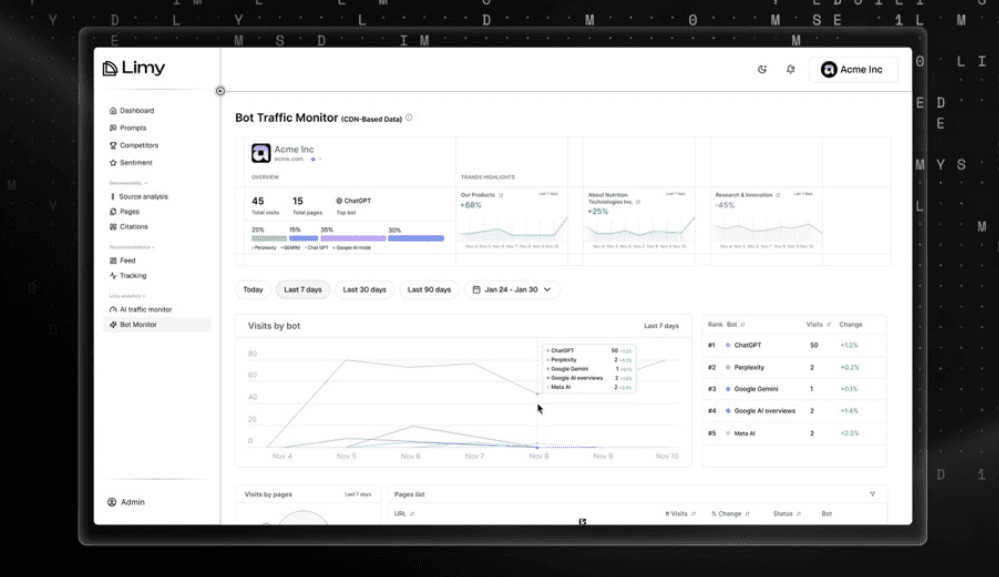
Limy operates at a completely different layer than the rest of the category. Instead of simulating prompts or scraping outputs, it captures real agent behavior directly on your infrastructure using CDN-level tracking and pixel-based monitoring.
It combines cross-LLM visibility tracking, which shows how your brand appears across AI systems, with prompt-level analytics to identify which queries trigger brand mentions and how frequently you are recommended. Then it uses prompt-to-conversion attribution to map the full journey from user prompt to conversion, a feature not available on any other platform. Lastly, Limy generates and actions content recommendations while tracking how each change improves visibility and conversions over time.
It also includes AI bot and crawler intelligence, showing which agents visit your site, which pages they prioritize, and how they interpret both structured and unstructured content, giving teams a direct view of how AI systems evaluate their brand.
Best for: Enterprise and growth teams that need full-funnel AI search measurement, from visibility to revenue attribution and execution.
“We went from minimal presence to second place in one month.”
Otterly.ai
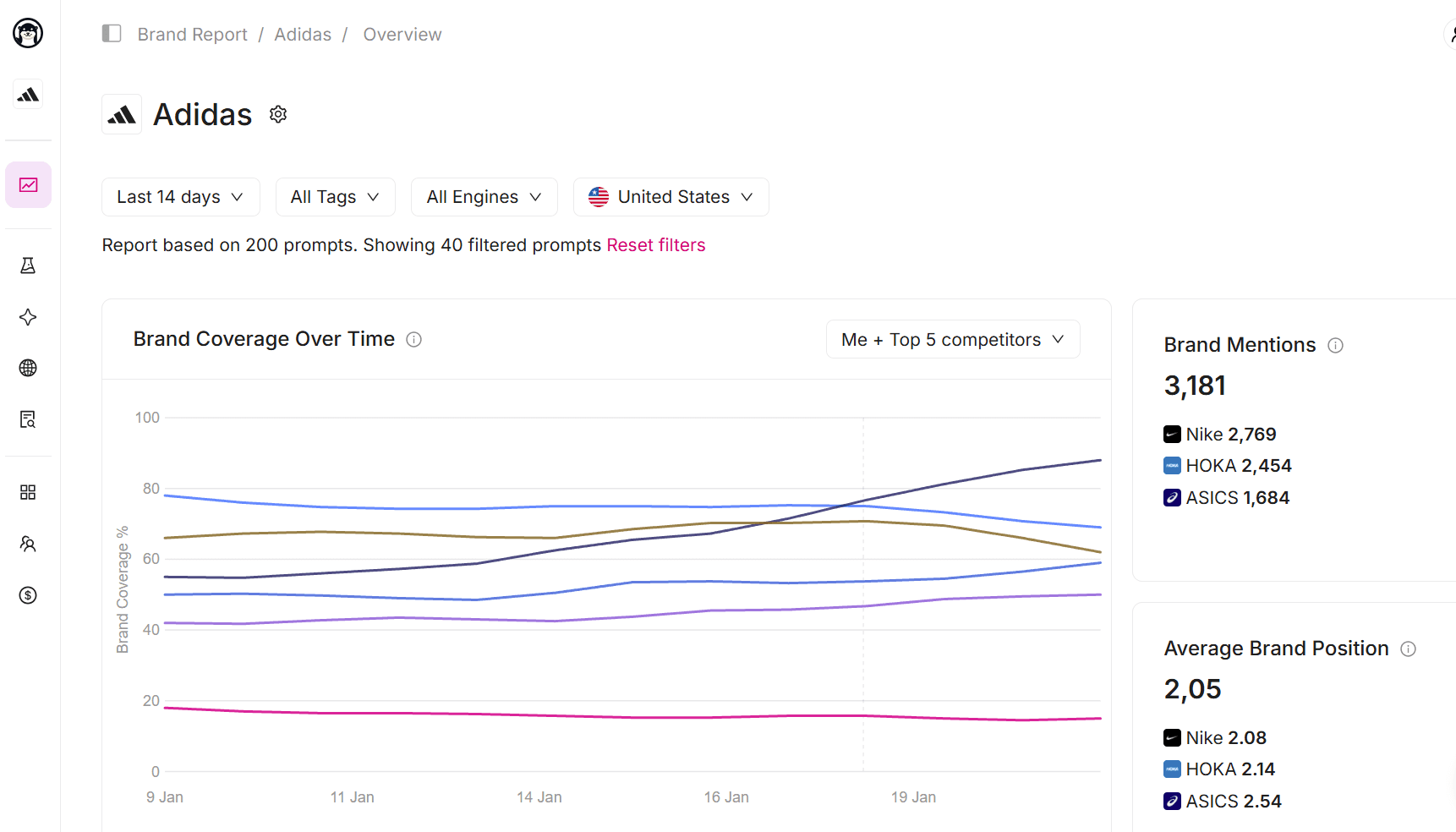
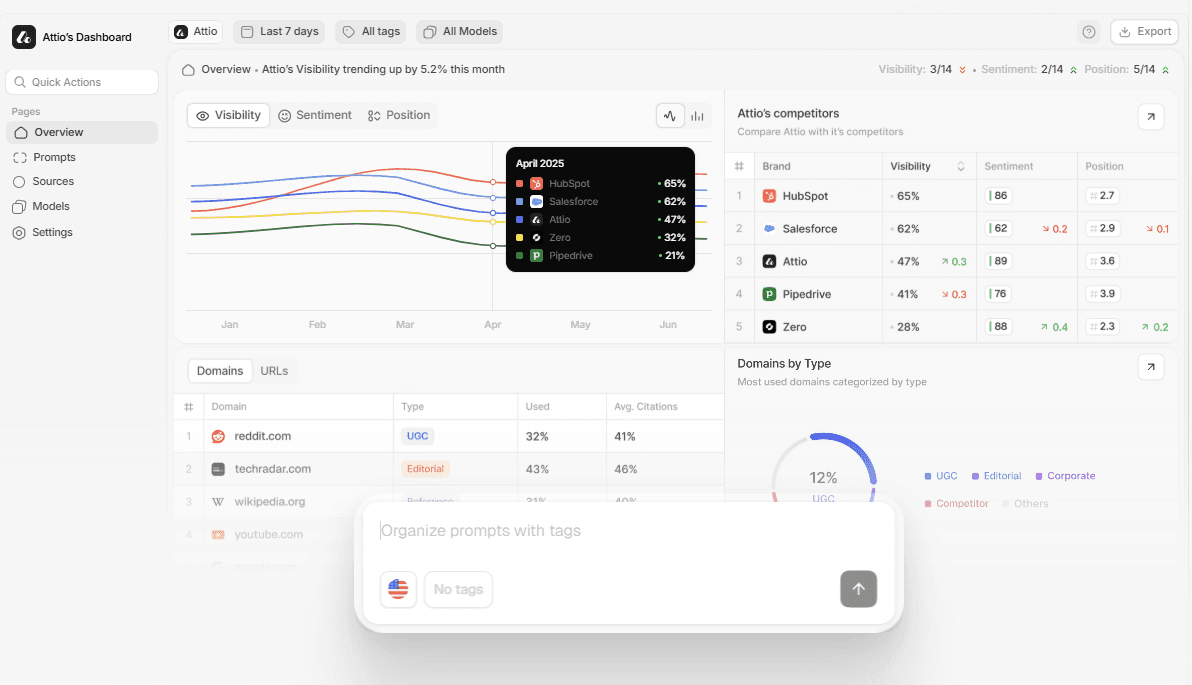
Otterly.ai focuses on automated AI search monitoring and change detection, helping teams track how their presence in AI-generated answers evolves. The platform runs continuous prompt testing, executing predefined query sets across multiple AI systems and storing historical outputs for comparison.
Its core functionality includes visibility scoring, which quantifies how often a brand appears across tracked prompts, and position tracking within responses, identifying whether a brand is mentioned first, included in a list, or omitted entirely. However, because it relies on predefined prompt sets, its insights are limited to what is tested, and it does not capture real-world agent behavior or downstream impact beyond visibility.
Best for: Teams that need ongoing monitoring and alerting for AI search visibility changes.
“Overall, Otterly is excellent. From the viewpoint of a regional manager, its biggest strength is the way that AI has impacted client relationships.”
AthenaHQ
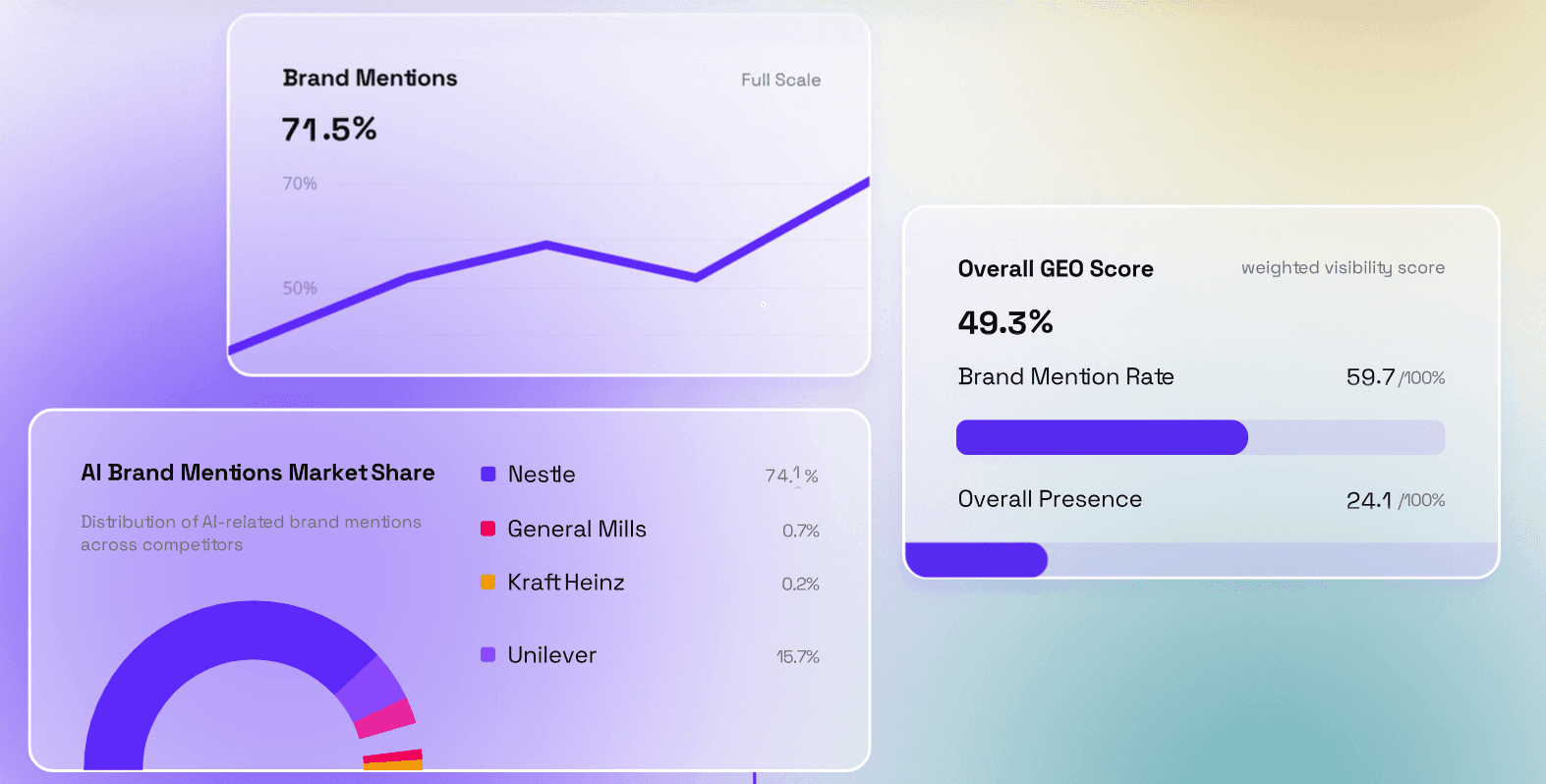
AthenaHQ is a newer entrant focused on AI visibility tracking combined with structured optimization frameworks for GEO (Generative Engine Optimization). It tracks how brands appear across major LLMs, analyzing prompt-level visibility, citation frequency, and competitor presence.
What distinguishes AthenaHQ is its framework-driven approach to optimization. Instead of just reporting visibility, it maps findings into structured strategies. The platform includes recommendation workflows that guide teams on which content to create or update based on visibility gaps. However, these recommendations are not executed within the platform, and there is no attribution layer linking improvements to traffic or revenue outcomes.
Best for: Strategy-focused teams looking to translate AI visibility data into structured GEO initiatives.
“AthenaHQ's regional segmentation was a differentiator for us. We discovered that our AI visibility in the Southeast was half what it was on the West Coast, even though our store density is similar.”
Prompt & AI Query Intelligence Tools
These tools focus on understanding prompts, query patterns, and AI response behavior, rather than directly tracking brand visibility across AI-generated answers. They are useful for diagnosing why certain queries trigger specific outputs, but they do not provide a complete view of how your brand performs across the AI ecosystem.
Promptwatch
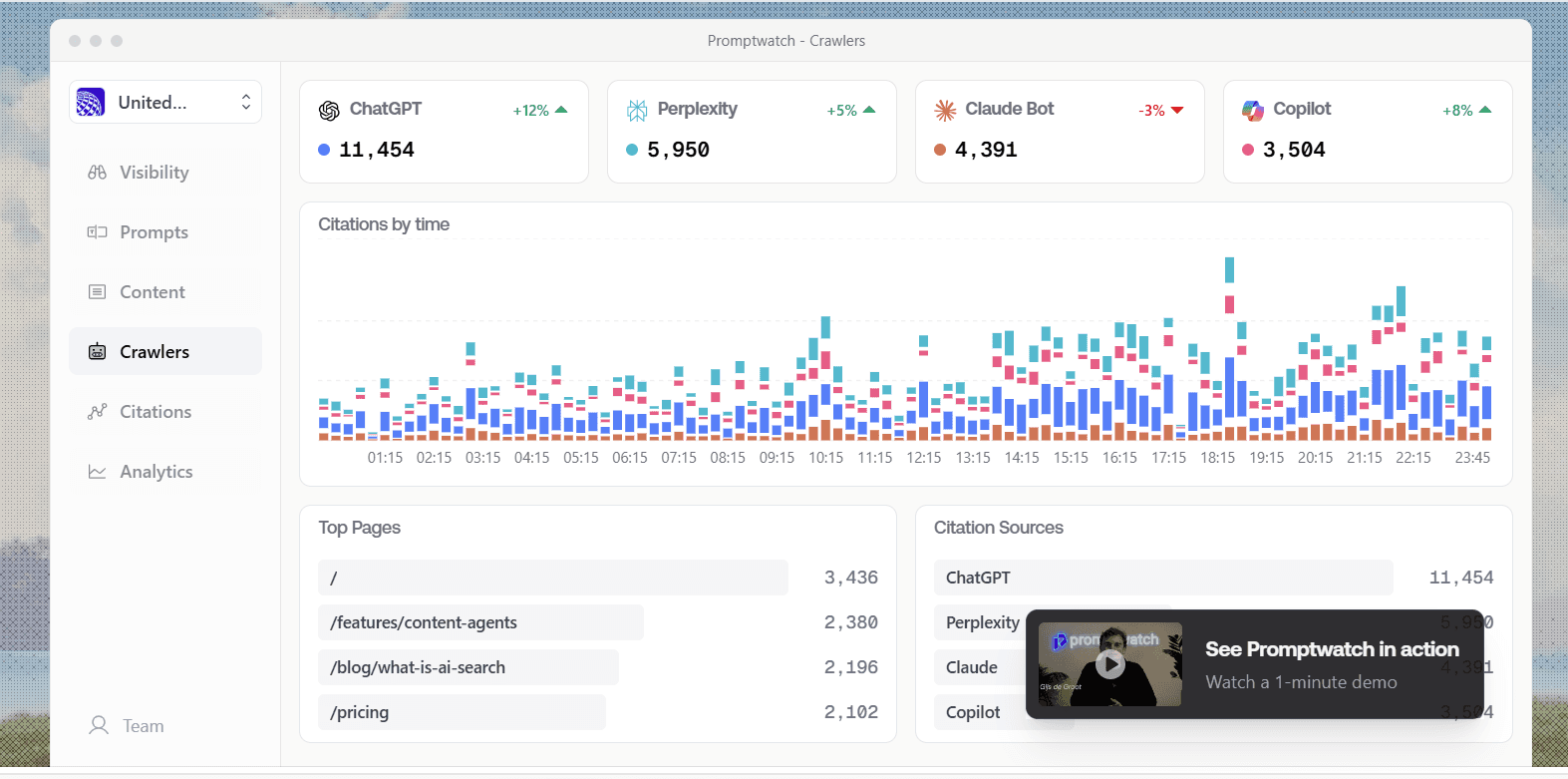
Promptwatch’s most distinctive capability is session-level tracking, where it records full prompt chains, including follow-up questions and iterative refinements. It also supports server-side logging and API integrations, making it particularly useful for companies embedding LLMs into their own products. Teams can monitor how users interact with AI features, identify failure points, and debug response quality, adding critical data context to otherwise opaque prompt-response interactions. However, Promptwatch does not aggregate brand-level visibility across prompts or provide competitive benchmarking.
Best for: Technical teams and SEO specialists analyzing prompt behavior and debugging AI outputs at a granular level.
“I tested several tools to measure brand visibility in LLMs, and Promptwatch was the only one that ticked all our boxes. It keeps improving with new features and has become essential for our marketing team.”
Rankscale AI
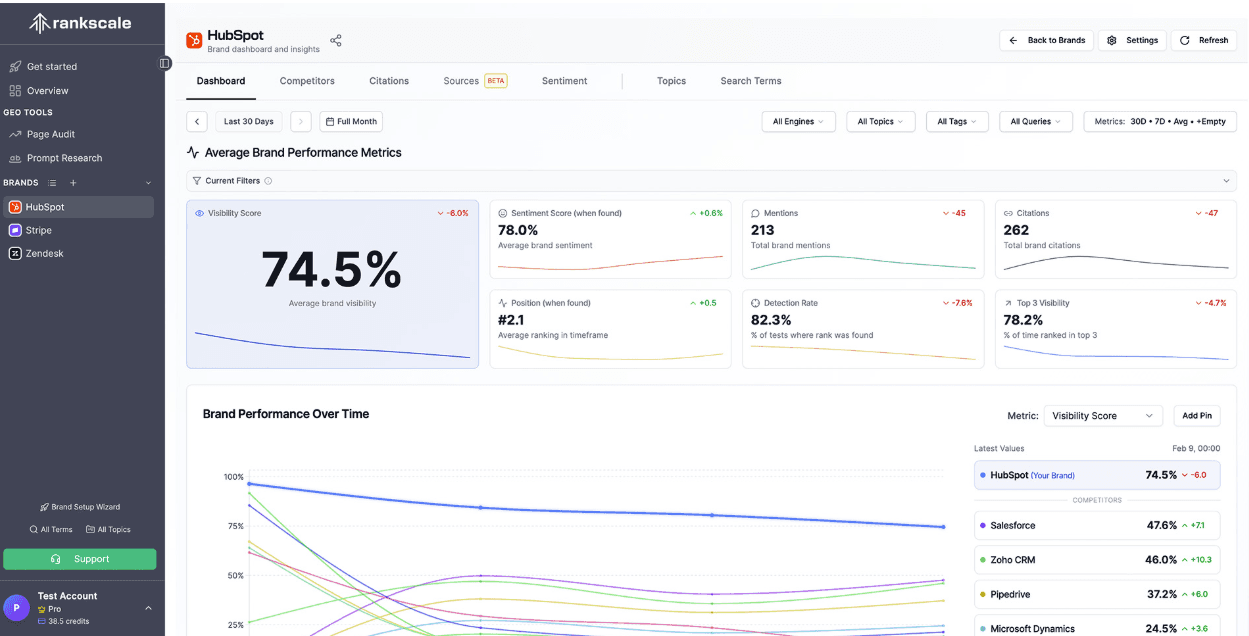
Rankscale AI maps traditional search intent to AI-driven query behavior, helping teams understand how keyword strategies translate into prompt-based discovery. It serves as a bridge between SEO and AI search by analyzing how keywords evolve into natural-language prompts.
A core feature is its keyword-to-prompt transformation engine, which takes existing keyword sets and generates likely prompt variations that users might ask of AI systems. These prompts are then evaluated across LLMs to identify response patterns, brand mentions, and gaps in topic coverage. However, its insights are based on modeled and simulated prompts rather than real-world agent interactions, and it does not track actual visibility performance across live user queries.
Best for: SEO teams looking to extend keyword research into AI-driven prompt analysis and query strategy.
AI Content Optimization Tools
These tools help improve the structure, writing, and publication of content, increasing the likelihood of being cited in AI-generated answers. They focus on content production and optimization rather than measuring whether visibility actually occurs.
Writesonic AI
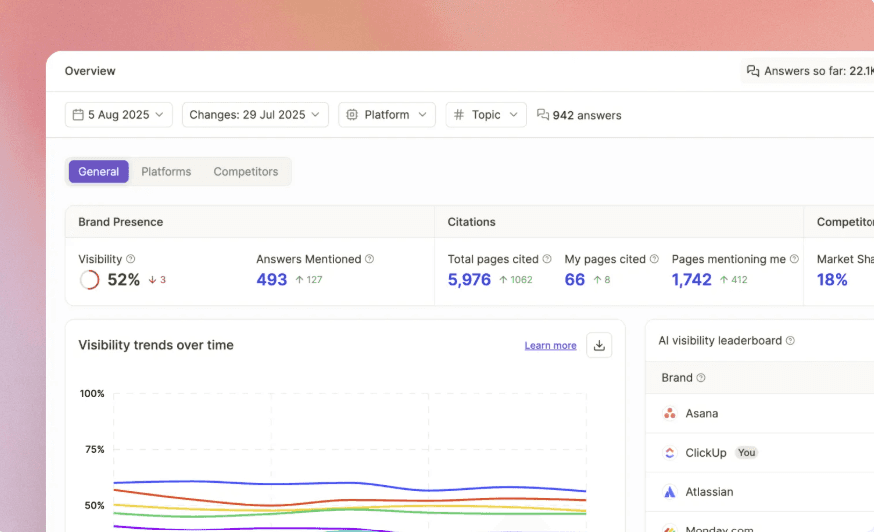
Writesonic offers integrated SEO and optimization features, designed to help teams produce content aligned with both search algorithms and AI-generated answer patterns. Its platform includes tools for long-form article generation, landing page creation, and marketing copy, all supported by AI-assisted workflows.
The platform integrates with tools like Surfer SEO. It provides fact-checking and citation support, which can improve content credibility and increase the likelihood of being referenced in AI-generated answers. Despite these capabilities, Writesonic does not track whether content is actually cited or recommended by AI systems.
Best for: Marketing teams producing high volumes of SEO- and AI-optimized content across multiple formats.
“Excellent UI, great AI integration to help you actually get work done. But what sets them apart is their deep knowledge of SEO and Content Marketing.”
Frase
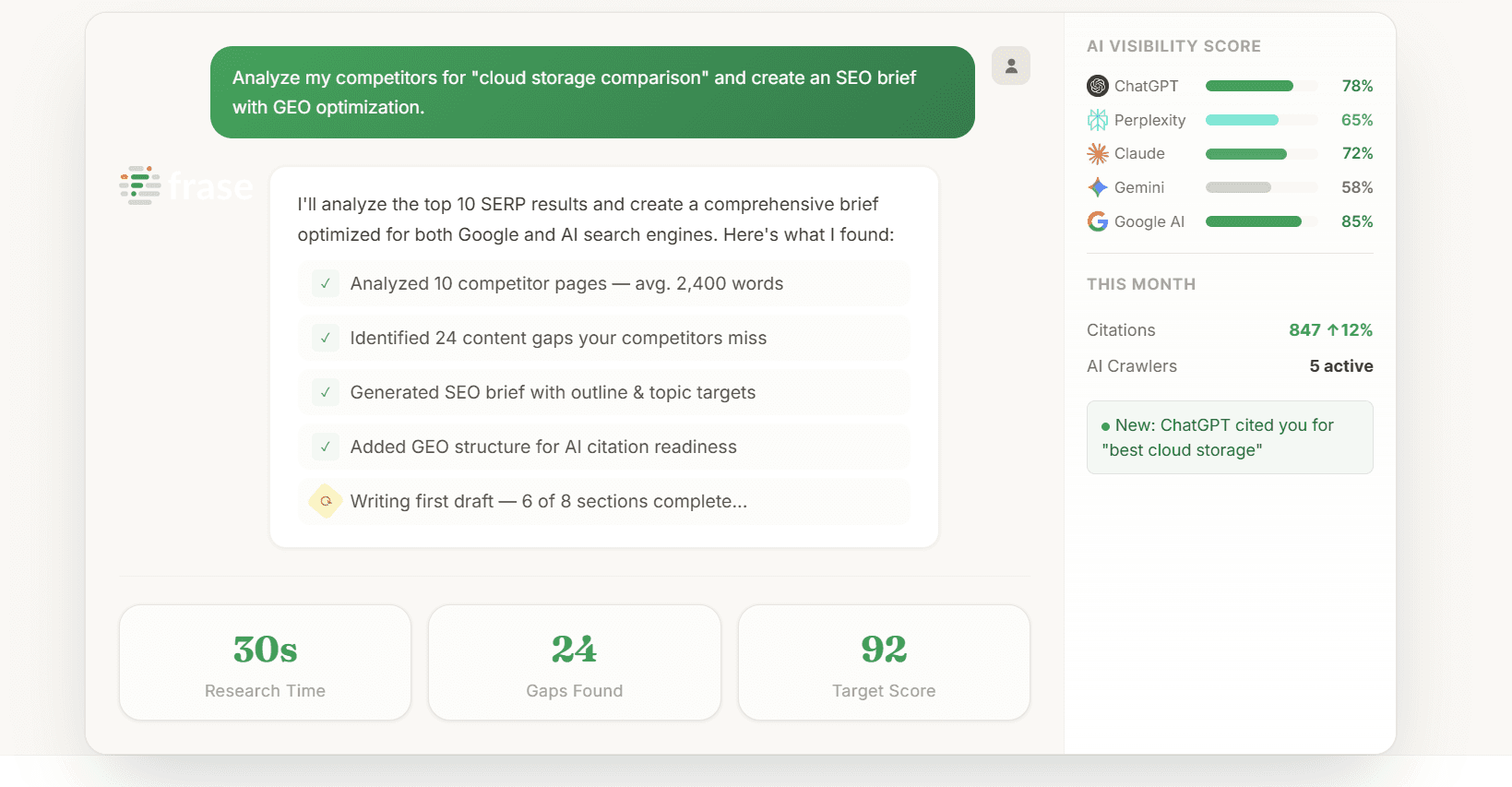
Frase helps teams create content aligned with search intent and topic coverage requirements. It focuses heavily on content briefs and SERP analysis, making it easier to identify the information needed to compete for visibility.
It also offers AI-assisted writing tools that allow teams to generate and refine content directly within the platform. It includes question-based optimization, identifying common queries related to a topic, and helping teams incorporate them into their content. However, it does not provide any visibility tracking or a feedback loop to confirm whether optimizations are effective in AI environments.
Best for: Teams focused on research-driven content creation and improving topical coverage.
“I use Frase.io's MCP in Claude to audit AI visibility, spot content opportunities, and ensure my site's health is good. The MCP is so easy to use and is a game changer because it brings insights directly into my workflow without needing to toggle between tabs.”
Surfer SEO
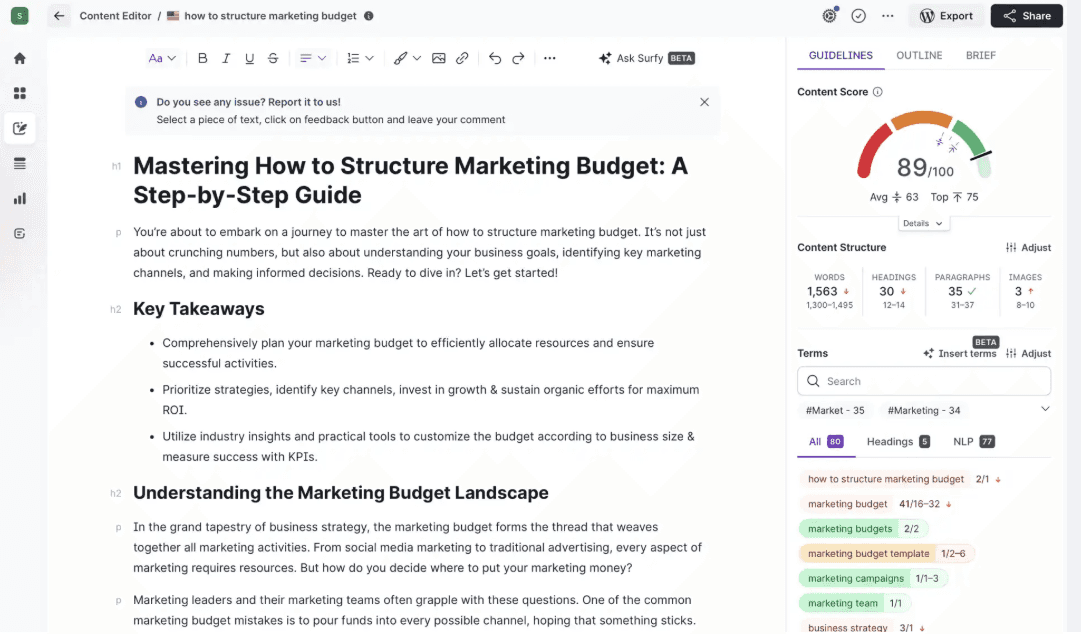
Surfer SEO analyzes ranking factors and provides detailed guidance on structuring content for maximum visibility. A key feature is its content editor, which provides real-time recommendations for keyword usage, content length, heading structure, and semantic relevance. Surfer’s content scoring system allows teams to benchmark their content against top-performing pages, ensuring alignment with proven ranking patterns.
Although not specifically designed for AI visibility, the structured, entity-rich content it promotes can increase the likelihood of being referenced in AI-generated answers. However, it does not directly track or measure that visibility.
Best for: SEO teams optimizing content structure and relevance using data-driven insights.
“I really like the Content Editor, which makes it much easier to organize and structure the content I'm working on. The auto-optimize feature is a great backup after I've manually optimized as much as possible.”
SEO Platforms Expanding Into AI Visibility
These platforms are established SEO tools that have introduced AI-related features. Their capabilities are typically limited to surface-level tracking or indirect indicators, rather than full AI visibility measurement.
Semrush AI Toolkit
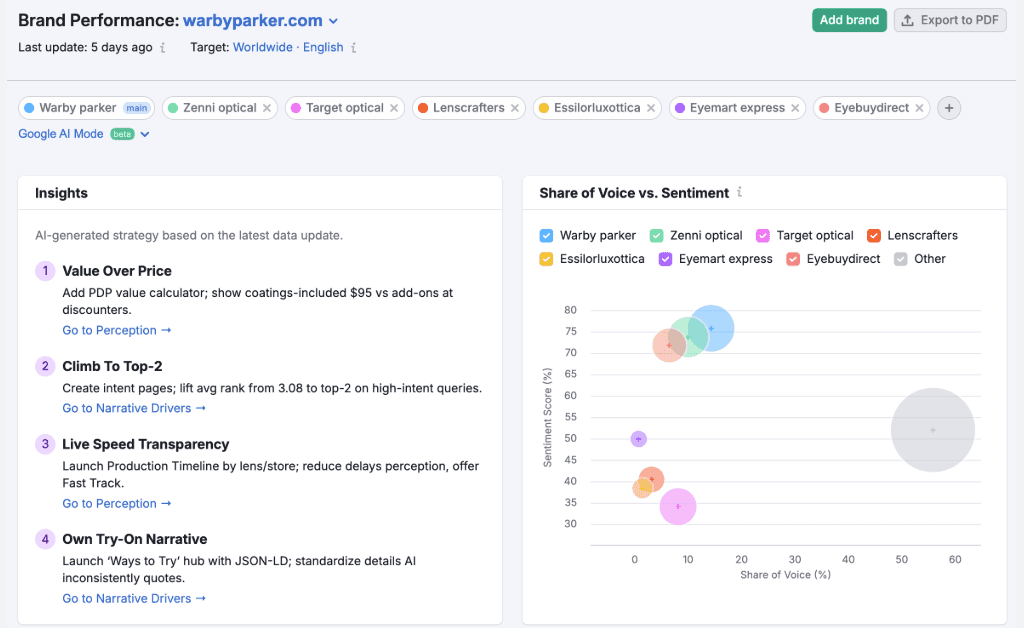
Semrush has expanded its platform with AI-focused features, including tracking for Google AI Overviews and limited visibility into how content appears in AI-generated summaries. The AI Toolkit allows users to monitor which keywords trigger AI-generated results, how often their content is included, and how visibility compares to competitors within those contexts. It also provides content recommendations, suggesting ways to improve relevance for queries likely to generate AI answers.
Semrush benefits from its extensive data infrastructure, allowing it to connect AI visibility insights with traditional SEO metrics such as rankings, backlinks, and traffic. However, its AI capabilities are still additive rather than foundational.
Best for: Teams already using Semrush who want to layer basic AI visibility insights into existing SEO workflows.
“We’ve been playing around with AEO vs SEO since the second half of last year, and Semrush has been a huge help for us. It’s been great to see their AEO functionality actively evolving alongside our own skills as we figure out what “proper” AEO actually looks like in practice.”
Ahrefs (AI Features)
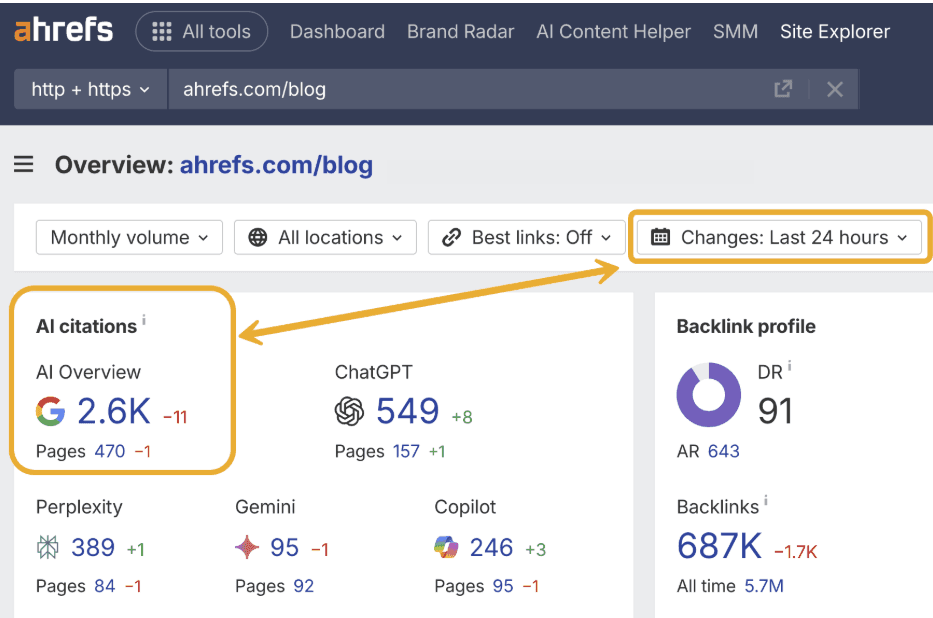
Ahrefs has begun incorporating AI-driven features into its platform, primarily focused on content optimization and SERP evolution rather than direct AI visibility tracking. Its tools help identify how search results are changing, including the presence of AI-generated summaries and their impact on click-through rates.
The platform continues to excel in backlink analysis, keyword research, and competitive intelligence, which remain relevant for building authority, a factor that influences AI-generated answers. Ahrefs also provides content gap analysis, helping teams identify coverage gaps that could improve overall visibility. While it offers indirect insights into AI search trends, Ahrefs does not currently provide prompt-level tracking, citation analysis, or cross-LLM visibility measurement.
Best for: Teams focused on authority building and on traditional SEO signals that indirectly influence AI outcomes.
“Ahrefs is insanely reliable when it comes to SEO data. The backlink index is among the strongest in the industry, and the keyword research data closely aligns with real-world rankings and traffic. I especially like how fast and clean the UI is.”
Moz (AI SERP Tracking)
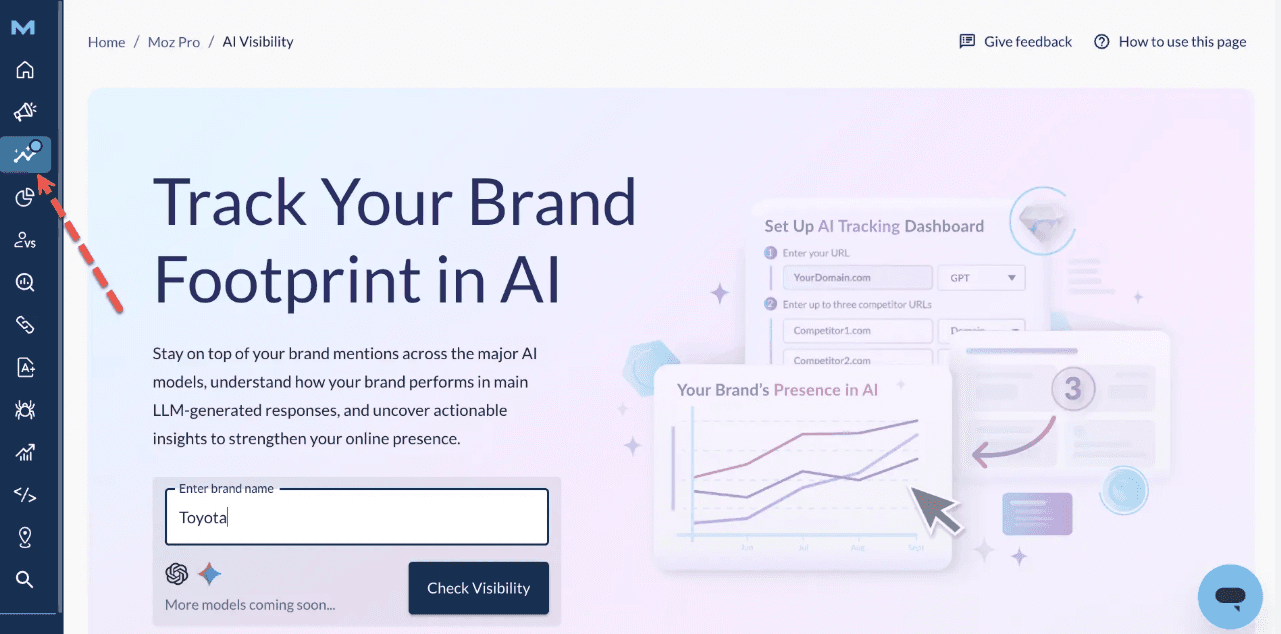
Moz has introduced AI SERP-tracking features, focusing on how AI-generated elements appear in search results and how they affect visibility. Its tools monitor the presence of AI-generated summaries, their frequency, and their impact on organic rankings. Moz also provides keyword tracking and competitive analysis, helping teams understand how the introduction of AI features influences SEO performance. Its platform emphasizes accessibility and usability, making it easier for smaller teams to adopt.
However, Moz’s AI capabilities are limited to search engine environments, particularly Google, and do not extend to broader LLM ecosystems.
Best for: Teams tracking the impact of AI features within traditional search results.
“I like how it's pretty robust and comprehensive with all the different tools it pulls together. I also find it pretty user-friendly and intuitive. Easy enough for beginners but robust enough for power users.”
SE Ranking AI Tracker
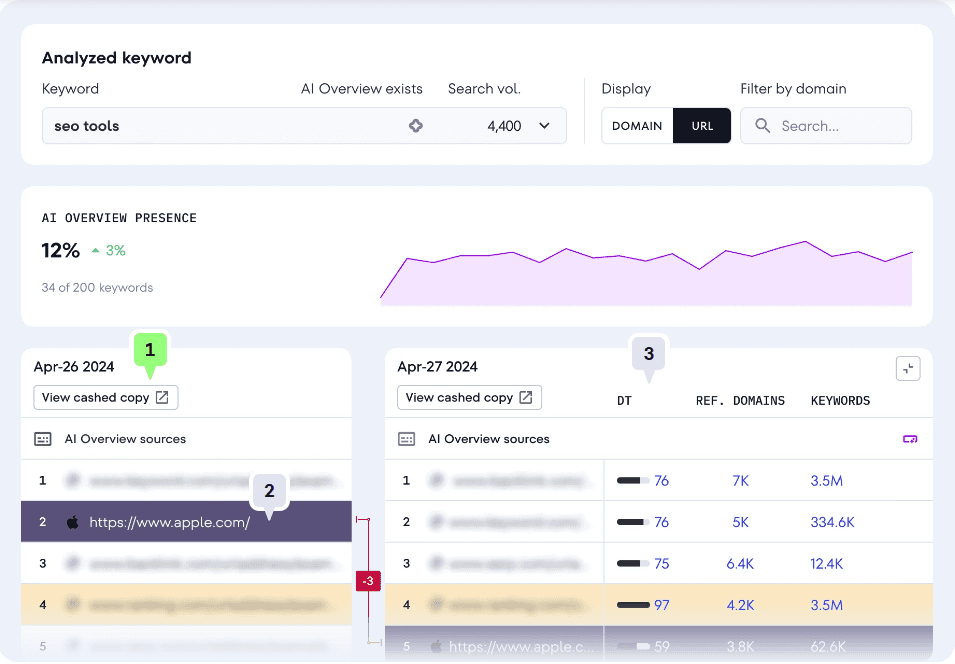
SE Ranking has introduced AI tracking modules that monitor how AI-generated elements influence search visibility. Its platform tracks keyword performance alongside AI features, helping teams understand how rankings shift when AI-generated answers are present.
It also includes competitor analysis and historical tracking, allowing teams to compare performance over time and identify trends. The platform is known for its affordability and ease of use, making it accessible for mid-sized teams. However, its AI capabilities remain focused on search engine overlays rather than independent AI platforms, and it does not provide prompt-level or cross-LLM visibility insights.
Best for: Mid-sized teams looking for accessible SEO tools with basic AI tracking features.
“I use SE Ranking to track keyword rankings and see how our content is performing in search. I also run site audits and check competitor visibility when needed. It helps me stay aware of what's working without getting too technical.”
From AI Visibility to Agent-Led Growth
AI visibility tools have helped marketers name the problem, but they do not solve the full commercial challenge. Knowing whether your brand appears in ChatGPT or Gemini is useful. Still, visibility alone does not show how agents evaluate your brand, which recommendations influence buyers, or whether those interactions create revenue. For teams treating AI search as a serious acquisition channel, reporting on mentions is only the starting point.
The next stage is Agent-Led Growth: building a system that helps your brand get discovered, evaluated, recommended, and measured inside the agentic web. Limy is the only agentic marketing stack that captures real agent behavior, showing how agents access and interpret your site, and co-creating the strategy and content needed to improve your position. With Limy, you can connect every optimization back to revenue.
Start now and build your agent-led growth engine with Limy.
FAQs
What is an AI visibility tool?
An AI visibility tool tracks how a brand appears inside AI-generated answers, including which prompts surface it, how often it is recommended, and where competitors appear instead.
How do AI visibility tools differ from traditional SEO tools?
AI visibility tools track brand presence inside AI-generated answers, not search rankings. Traditional tools measure clicks, impressions, and backlinks, signals that do not capture what happens before a user ever reaches a website.
Which AI visibility tool is best for connecting brand mentions to revenue?
Limy is currently the only platform that combines cross-LLM visibility tracking with prompt-to-conversion attribution, linking AI-generated recommendations directly to downstream revenue outcomes.
What is the difference between simulated prompts and real agent behavior in AI visibility tracking?
Simulated prompts are predefined queries a tool runs to test how an AI responds. Real agent behavior is actual AI crawlers and agents accessing your infrastructure. Most tools rely on simulated prompts; Limy captures real agent behavior through CDN-level tracking and pixel-based monitoring.
What is GEO (generative engine optimization)?
GEO is the practice of optimizing content and brand signals to improve inclusion in AI-generated answers. Unlike traditional optimization, it focuses on how AI systems evaluate, select, and describe brands, not just how pages rank in search.
Can I use Semrush or Ahrefs to track AI visibility?
Both have introduced AI-related features, but these are limited to Google AI Overviews and SERP-level tracking. They do not provide cross-LLM visibility measurement, prompt-level analysis, or citation tracking outside traditional search.
Most Viewed Articles


