




AEO vs SEO: What to Focus on in 2026
For a long time, SEO rankings gave marketers a dependable read on discovery. If the right pages were visible, traffic usually followed, and teams could reasonably connect search performance to growth. That relationship is no longer as direct. On high-intent queries, users are getting part of the answer from AI-generated results before they ever click on a site link. SEO still matters, but it no longer explains enough on its own to guide strategy.
Traditional search engine volume is expected to drop by around 25% by the end of 2026 as AI chatbots and agents take on more of that activity. At this point, teams need to account for the fact that AI systems influence brand mentions in generated answers. AEO needs to become part of the search strategy now, before competitors gain a stronger position in those answers.
What is AEO?
AEO, or Answer Engine Optimization, is the work of improving how your brand appears when AI systems generate answers. That includes the obvious part - the basic question of whether your brand shows up at all, but it also includes the decision layer underneath it.
AEO is closely linked to marketing attribution. You need to know which prompts surface your brand, and how AI systems describe it. And if you are being treated as a credible option alongside competitors, or left out of answers altogether.
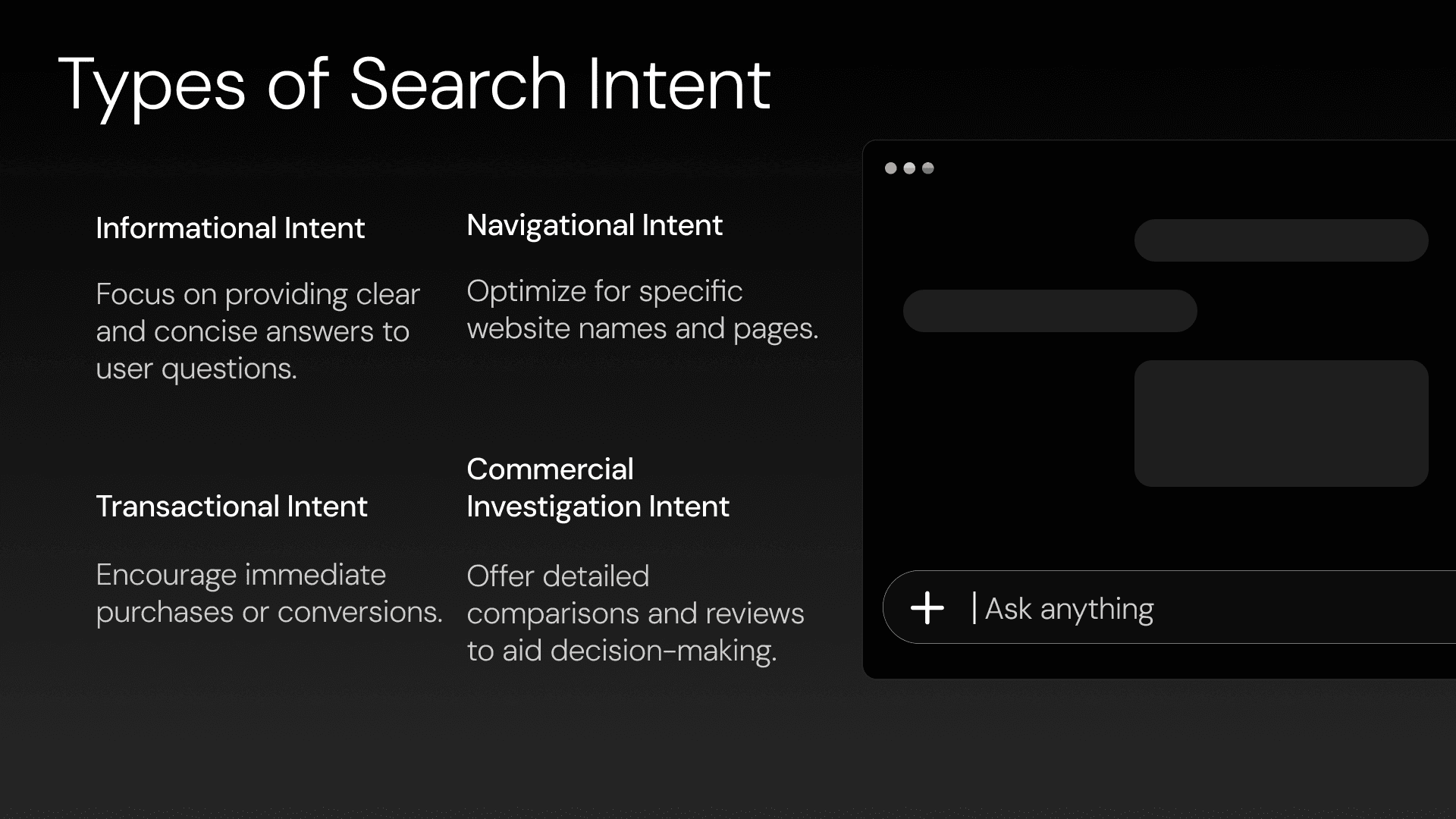
The move from keywords to prompts changes the kind of visibility you are seeking. SEO is built around getting the right page to rank for a target term. AEO has to account for full questions, comparison queries, and buying-stage prompts that reflect how people are asking for recommendations in 2026. Instead of searching for the term “CRM SaaS,” they are asking more specific questions, such as “what’s the best CRM SaaS tool?”
That changes what your content needs to do. It needs to answer specific questions clearly, present information in a way AI systems can pull and reuse, and remain consistent enough across your site and other sources that your brand appears reliable when the model compares options. SEO is more than making content “AI-friendly.” The real goal is to improve how your brand is understood and surfaced before someone reaches your site.
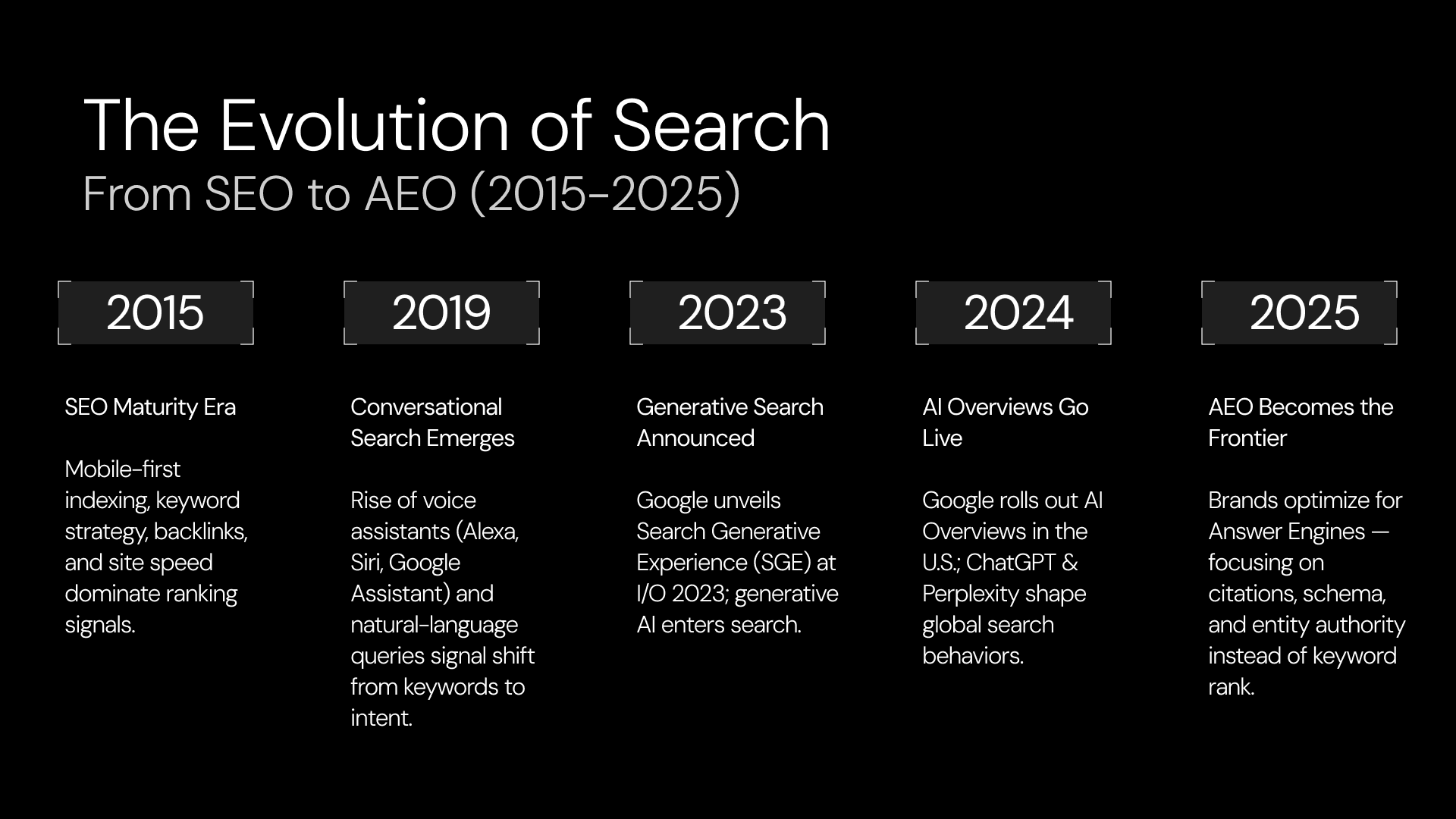
AEO vs SEO: What’s Actually Changing
The easiest way to get AEO wrong is to treat SEO and AEO like opposing strategies. They are not. SEO is still the base layer. It helps search engines and AI systems crawl your site and understand what your pages cover, which affects how usable and trustworthy your content appears to be. If that foundation is weak, it becomes harder to earn visibility in AEO.
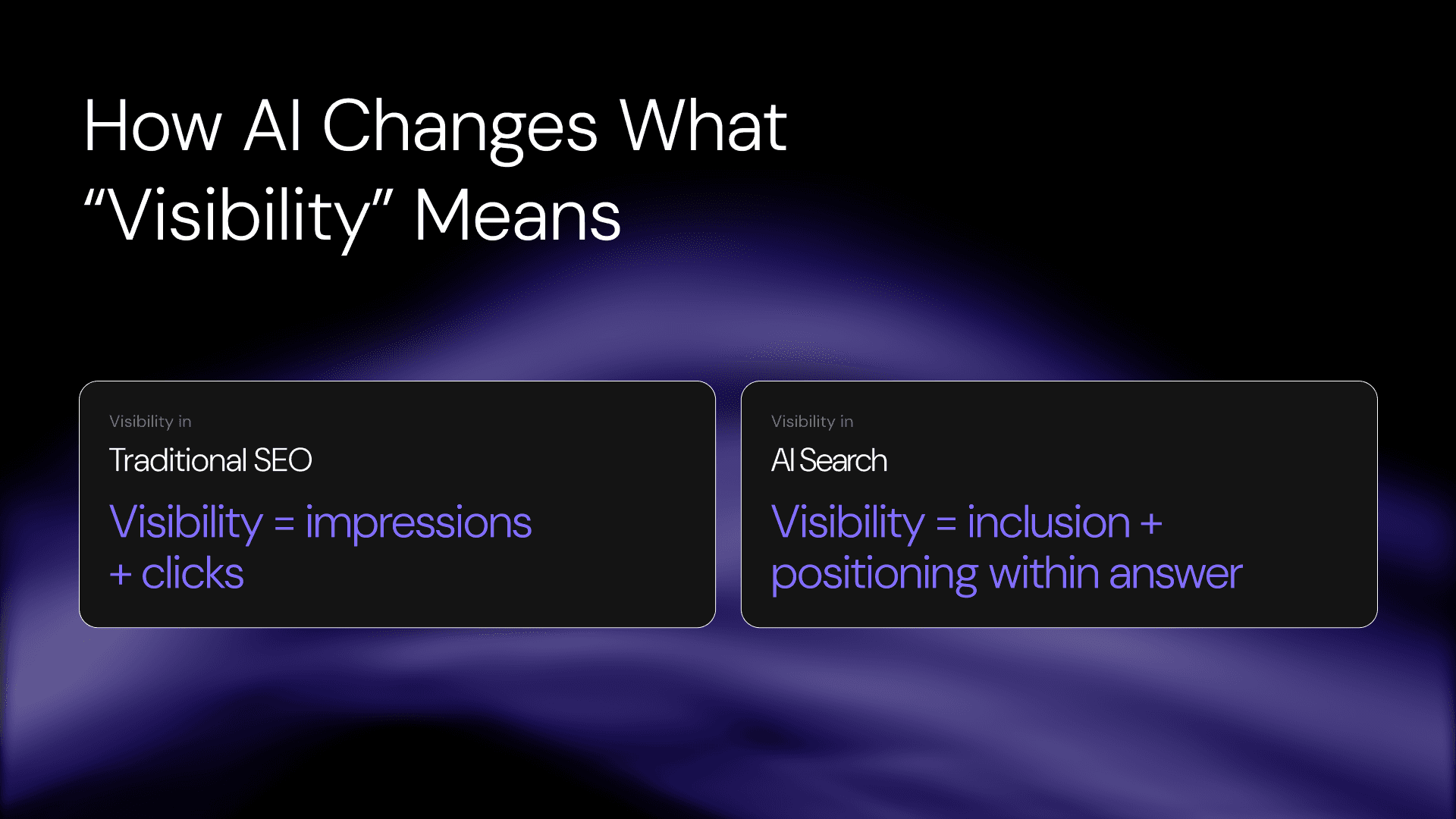
What has changed is the role that visibility plays in the journey. In traditional search, your page appeared in the results, and the user evaluated it from there. This journey allowed you the chance to compete with other players and have more control over your positioning. The user saw a set of links, opened a few pages, read reviews and product recommendations, and made their own comparison.
In AI search, that comparison is often compressed into the answer itself. The AI model handles the evaluation, not the user. It pulls from a set of sources and builds its own data context before deciding which brands to include in its condensed answer. You want your name to appear in the narrowed set of options the model presents.
That is why rankings remain relatively stable while performance continues to weaken. A page may continue to hold a strong position for a commercial query, but that does not mean it is influencing the buying decision as much as it did in the past. If an AI system starts naming competitors in summaries, the ranking data may not provide a complete picture.
SEO helps you get into the pool of possible sources. AEO influences whether you are the brand that gets pulled from the pool of sources into the answer users receive.
You already see this in the results:
More users are getting what they need without clicking through
AI tools are shaping high-intent decisions earlier in the journey
Some purchase decisions are being narrowed before a site visit happens
Competitors gain ground inside AI answers without outranking you in search
Once an AI system repeatedly treats certain brands or sources as dependable, it tends to keep returning to them. That creates a feedback loop. Inclusion is not evenly distributed, and the brands already being cited becomes even harder to displace.
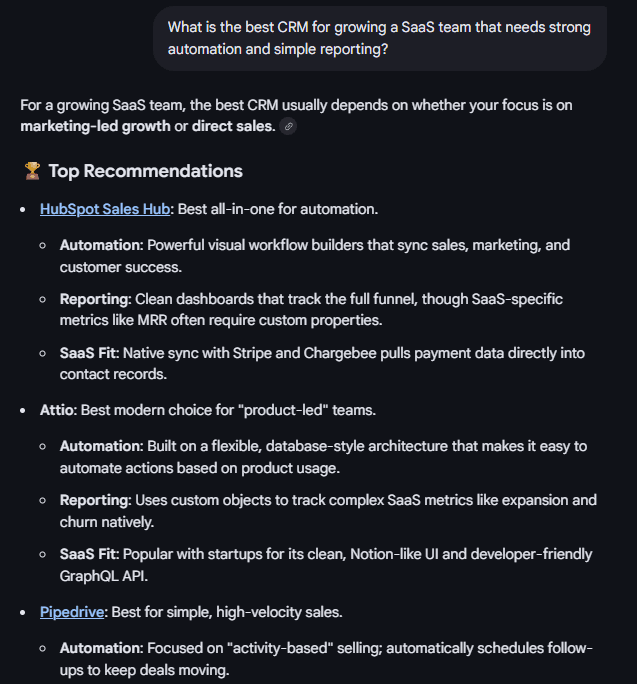
Take a prompt, like “What is the best CRM for growing a SaaS team that needs strong automation and simple reporting?” In a traditional search flow, the user might review six or seven vendors across several tabs. In an AI-led flow, they may get a short answer with a few named tools and a quick rationale for each. If your brand does not appear in that response, your position elsewhere matters less because you’re not part of the user’s set of possible choices.
Category | SEO | AEO |
Goal | Earn visibility in search results | Earn inclusion in AI-generated answers |
User Journey | User compares links and decides | AI narrows options before the visit |
Visibility Model | Ranked results page | Recommended set of answers |
Performance Signal | Rankings, clicks, traffic | Mentions, recommendation rate, and inclusion |
Measurement | Search Console, GA4, rankings | Prompt-level presence and influence |
Competitive Dynamic | Broad competition across results | Concentrated advantage for repeatedly cited brands |
AEO vs SEO in 2026: What Should You Focus On?
1. Protect Your SEO Foundation
SEO still supports the underlying mechanics of AI strategic visibility. Search engines and AI systems depend on accessible site architecture, clear page-level signals, well-structured content, and strong internal linking to interpret and surface your pages effectively. If those basics are weak, performance is limited in both traditional search and AI-generated answers. Teams should focus on:
Keeping important pages easy to crawl and internally linked
Using titles, headings, and on-page copy that make the page's purpose clear
Updating key commercial pages (product, pricing, and comparison content)
Keeping product details and positioning consistent across the site
2. Focus on The Prompts Where Decisions Happen
Not every query needs the same level of AEO focus, but high-intent queries do. More of the comparison and recommendation stage is now happening inside AI-generated answers, especially when users are trying to narrow down options. Teams should focus on:
Identifying which prompts are driving recommendations and comparisons
Tracking if their brand is included in those answers
Watching where competitors are being surfaced instead
Prioritizing the prompts that are closest to evaluation and purchase decisions
3. Stop Treating Traffic as the Only Useful Signal
Traffic is not enough to explain performance because decisions are happening upstream. A buyer might first come across your brand in an AI-generated answer, then return later through branded search, direct traffic, or another channel.
Standard analytics usually does a poor job of connecting those two moments. Teams still see visits and conversions, but miss the part that influenced them in the first place, especially across the product development lifecycle, where decisions are shaped long before a measurable interaction occurs. Teams should ask:
Where is your brand being recommended?
Which AI-driven interactions lead to visits and conversions?
Which prompts and platforms link to measurable outcomes?
To get answers to these questions, add a small “AI influence” KPI set alongside your usual SEO metrics. At a minimum, track:
Inclusion rate on key decision-stage queries – Terms like best, alternatives, and pricing are strong indicators here
Competitor inclusion rates on those same queries – Look for where they show up and you don’t
AI-assisted conversion rate – What percentage of AI-assisted sessions or leads convert? Compare that to the conversion rate of non-AI sessions/leads.
AI-influenced pipeline/revenue – Value from conversions that were influenced by AI earlier in the decision path
4. Close Citation Gaps Before They Harden
AEO creates a narrower visibility pattern, in which AI systems repeatedly surface the same brands and sources. That catches teams off guard because traditional search usually gives more brands a chance to compete on the page.
Competitors that have already appeared in a query have an advantage - they will keep getting pulled into similar results. Generative Engine Optimization (GEO) centers on this dynamic: influencing which brands AI systems repeatedly select and reinforce across answers. If no one closes that gap, their position can strengthen and become harder to displace over time. Teams should focus on:
Identifying the queries where AI answers already favor competitor brands
Revising content so it addresses those prompts more directly and more clearly
Reinforcing the topics and claims that AI systems are pulling from competitor sources
Checking those answers regularly to see if visibility starts to shift
5. Build the Measurement Layer That Connects AI Discovery to Revenue
Measurement is going to be the hardest part for most teams. Traditional analytics does not reveal which prompt triggered the recommendation, which recommendation led to the interaction, or which interaction influenced the conversion. Teams need to address that blind spot.
GEO tools offer part of the solution. They show where your brand appears in AI-generated answers, which prompts trigger visibility, and how competitors are gaining inclusion instead. But most stop at visibility. They do not show what actually happens after a recommendation, or how that visibility translates into revenue.
What is missing from most reporting is the full structure of agentic discovery:
Prompt → Recommendation → Interaction → Conversion
Limy is the only marketing stack that makes this entire path measurable, from the initial prompt to the revenue it drives. Unlike tools that rely on simulated queries or LLM outputs, Limy captures real agent behavior at the infrastructure layer, showing how AI systems access, interpret, and act on your content. It tracks which prompts trigger agent activity, which pages these systems extract and use, and how those interactions convert into pipeline and revenue.
Through prompt-to-conversion mapping, teams see exactly which AI recommendations drive business outcomes. Cross-LLM visibility tracking shows where your brand is being included or excluded across AI systems. The recommendations engine then turns those insights into a prioritized execution plan, highlighting citation gaps and generating content improvements. Teams know exactly what to change to increase recommendations - and what those changes are worth in revenue.
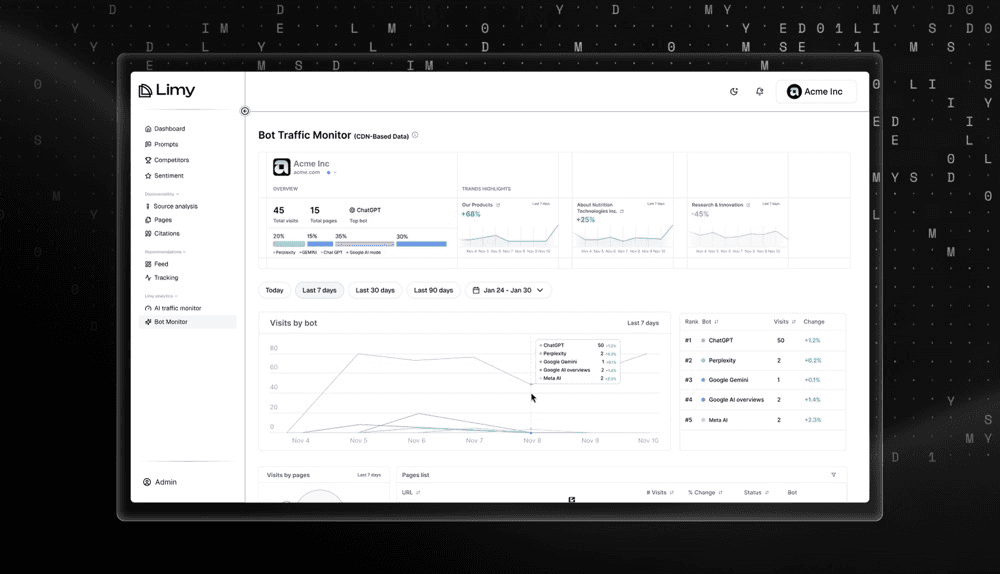
Making Agentic Search Visible and Acting on It
Rankings aren’t dead, but inclusion is now the metric that determines whether you’re part of the decision. More buyer discovery and evaluation is happening inside AI-generated answers, and teams have very little visibility into this new part of the journey. Traditional SEO and analytics platforms are not built to track prompt-level visibility or show where AI systems are recommending your brand. They also cannot clearly tie those interactions back to revenue.
To compete effectively in 2026, teams need a way to see and manage that layer. Limy’s marketing stack for the agentic web shows you how AI systems discover your brand, where you are being recommended, which changes will improve your position, and how those outcomes connect to revenue. You turn AEO into a measurement layer and manage AI search as a real growth channel.
Book a demo with Limy to identify your AI visibility gaps and turn AI search into a predictable revenue channel.
Most Viewed Articles


